
Say the name Lassie, and there is a good chance almost everyone recognises it. That is no accident. It is the result of years of consistent brand-building. Stramigo has measured that for Lassie’s rice and grain range for several years running, and the most recent wave confirms it: awareness can hardly get any higher. The real question that measurement answers is what comes next, because knowing a brand and buying it are two different things.
From known to chosen: turning awareness into purchase
Being known is a real asset, and Lassie’s awareness is about as strong as it gets in its category. But a brand everyone recognises is not automatically a brand people keep choosing. High awareness earned today is not a fixed asset either: it has to be maintained wave after wave, especially as new generations of buyers enter the market who have not yet built that same familiarity. Once awareness is this high, the tracker’s real value shifts: it is no longer about proving people know the brand, but about explaining what still separates recognition from an actual purchase, which brand associations need to strengthen, and which practical barriers keep people who already know Lassie from choosing it anyway.
Convenience as a growth lever, across generations
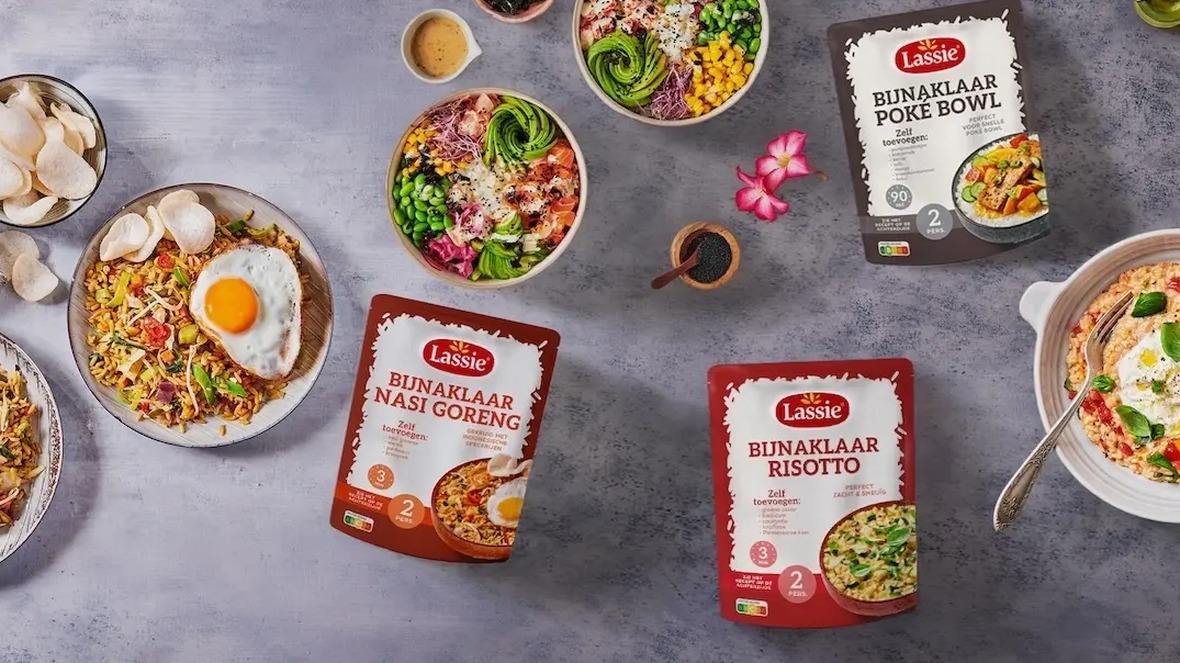
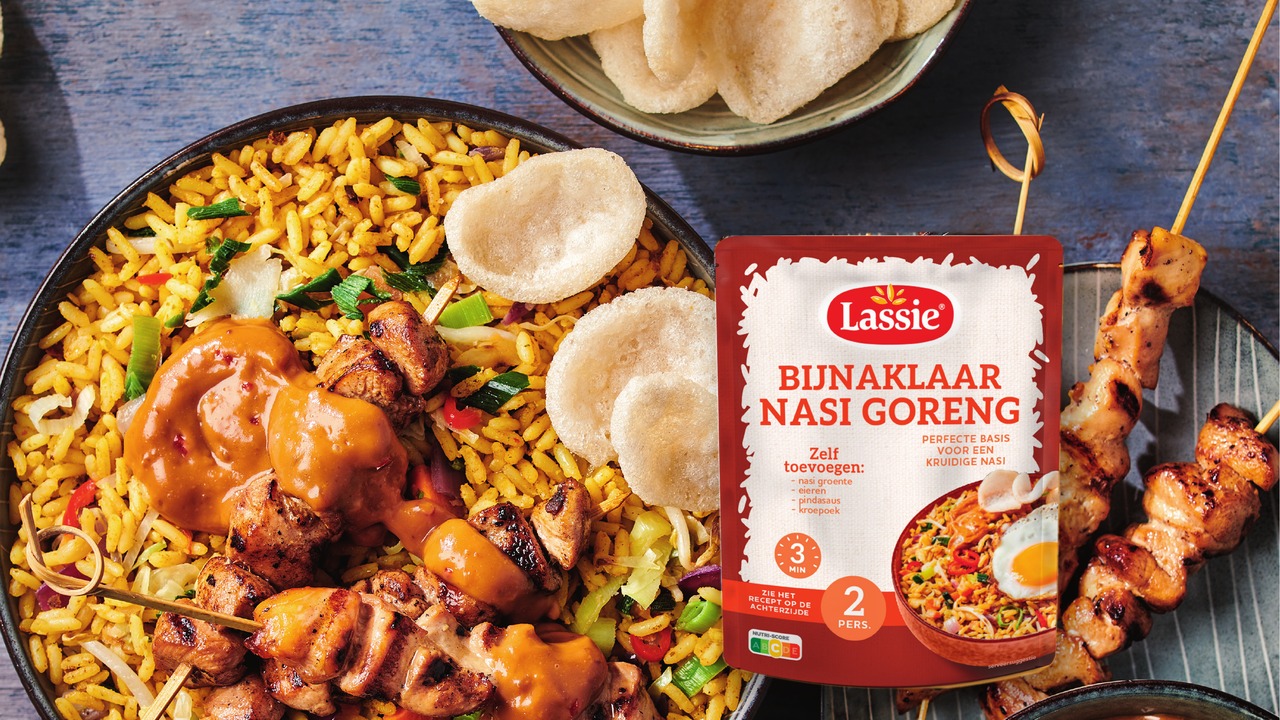
One of the clearer answers is convenience. Cooking habits have shifted: smaller households, less time on a weekday evening, and more people looking for a meal that takes minutes rather than an hour. Lassie’s ‘Minuutje’ range, microwave rice ready in a minute, its ‘Bijnaklaar’ Nasi Goreng, rice that is already cooked and seasoned so all that is left is adding your own ingredients, and ready-to-eat pouches you can eat straight from the pack, are direct answers to that shift. The tracking data shows the appeal is not limited to younger buyers looking for speed: older buyers value the same ease, for their own reasons, and the association with convenience is strengthening across both groups at once. That combination makes convenience worth marketing broadly rather than narrowly, and it doubles as one of the more natural ways to reach the younger buyers a brand needs to keep winning over.
“Brand research does not just show us where the brand stands this year, it also shows whether a shift is a coincidence or a real trend.”
“We use those insights directly in our marketing plan and brand strategy: where we put media budget, how we bind younger generations to the brand more effectively, and how we stand out from private labels. The research does not tell us what to do, but it gives us the sharpness to make the right choices.”
Paul StamMarketing & Innovation Manager Ebro Foods
Which elements actually need to be measured and steered
Grip on a brand starts with knowing which elements say something about its health: awareness, both unprompted and prompted, preference, purchase behaviour, and a fixed set of brand associations, rational ones such as quality and price alongside more emotional ones such as trust and familiarity. In practice that means asking not just whether people know Lassie, but whether they would call it ‘easy to prepare’, ‘good quality’, ‘trustworthy’ or ‘healthy’. Concrete, ownable qualities like these are what a brand can actually act on; a single abstract sentiment score cannot tell you what to do differently on Monday morning, knowing which of these is strengthening or fading can.
Two opportunities the research reveals
Beyond awareness and convenience, the same measurement points to two concrete opportunities, ones that reach well beyond Lassie alone.
The first is winning over younger generations more deliberately. They grew up with far more brand choice than their parents did, and loyalty built over decades with older buyers does not automatically carry over. Products like the ‘Minuutje’ range and the ‘Bijnaklaar’ Nasi Goreng already speak their language, speed and convenience that fit how they actually cook, but the opportunity is to say so more directly: recipe content, formats and channels built around a quick, one-pan dinner for one or two, rather than communication built for the family meal older buyers grew up with.
The second is giving people a reason to choose the brand over a private label for something other than price. Private labels increasingly match branded rice on quality, but rarely on the kind of product innovation the ‘Minuutje’ format represents, or on the taste and trust a brand builds up over years. The opportunity is to make those differences visible where the comparison actually happens, on pack and in-store, rather than assuming people already know why the branded option is worth the extra cost.
Together, these two opportunities come down to the same task: keep earning the awareness Lassie has already won, especially with the generations still building their own relationship with the brand, and give people, whatever their age, a clear reason to choose it over the alternative next to it on the shelf. For a brand this well known, that is a good position to build from.
The questionnaire evolves, the core stays fixed
The tracker itself is not static. Each wave, a handful of questions are dropped and a handful are added, based on what actually needs answering that year. What stays fixed, deliberately, is the core: the same awareness, preference and brand-association questions, asked the same way, wave after wave. That balance, adapting the edges while protecting the core, is what keeps years of data speaking to each other instead of turning into a series of unrelated reports. Every wave is run among 1,000+ respondents, so a shift between waves reflects a real movement in the market rather than noise in the sample.
Lessons for marketers
-
1
Know where your brand stands, not just when something goes wrong
Grip on a brand means not waiting for a campaign evaluation or a sales dip to find out how it is actually perceived. A running measurement means the answer is already there the moment a decision needs it.
-
2
Measure brand associations continuously, do not rely on assumption
Which qualities people associate with a brand shifts gradually, and often invisibly from the inside. The only way to catch that shift early, instead of discovering it after a campaign has already been built on the wrong assumption, is to keep measuring the same set of associations, wave after wave.
-
3
Adjust course based on what the research shows
Use each wave’s insights as a direct input for your marketing plans: what to keep doing, what to sharpen, and where to act differently in the year ahead. A tracker only pays off once its findings actually change a plan.
For Lassie, brand tracking has become less of a research project and more of an operating habit: a structural view of how the brand is developing that everyone making decisions about it can draw on. That grip, more than any single finding, is what continuous brand research is really for.